
App template
Lockbox: an escape room & activity venue app template.
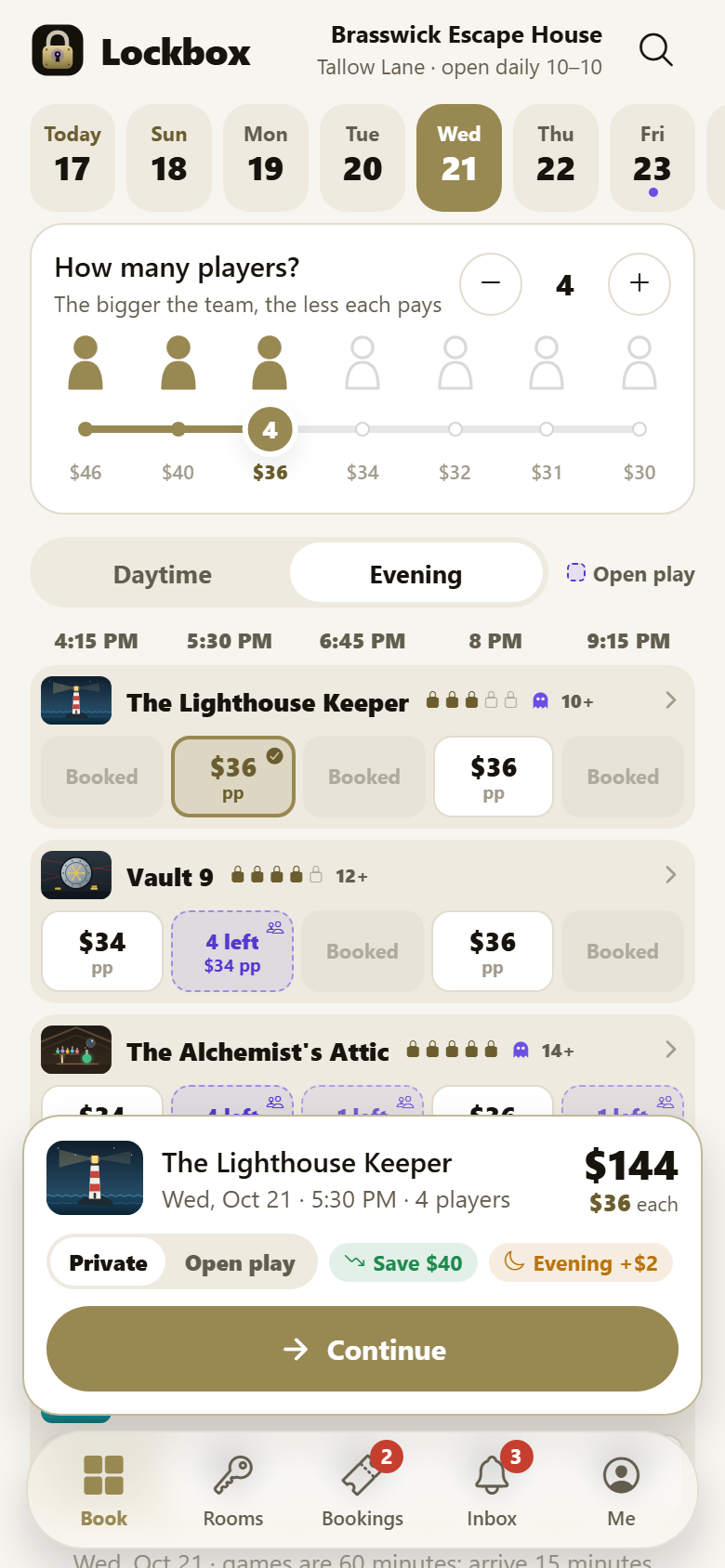
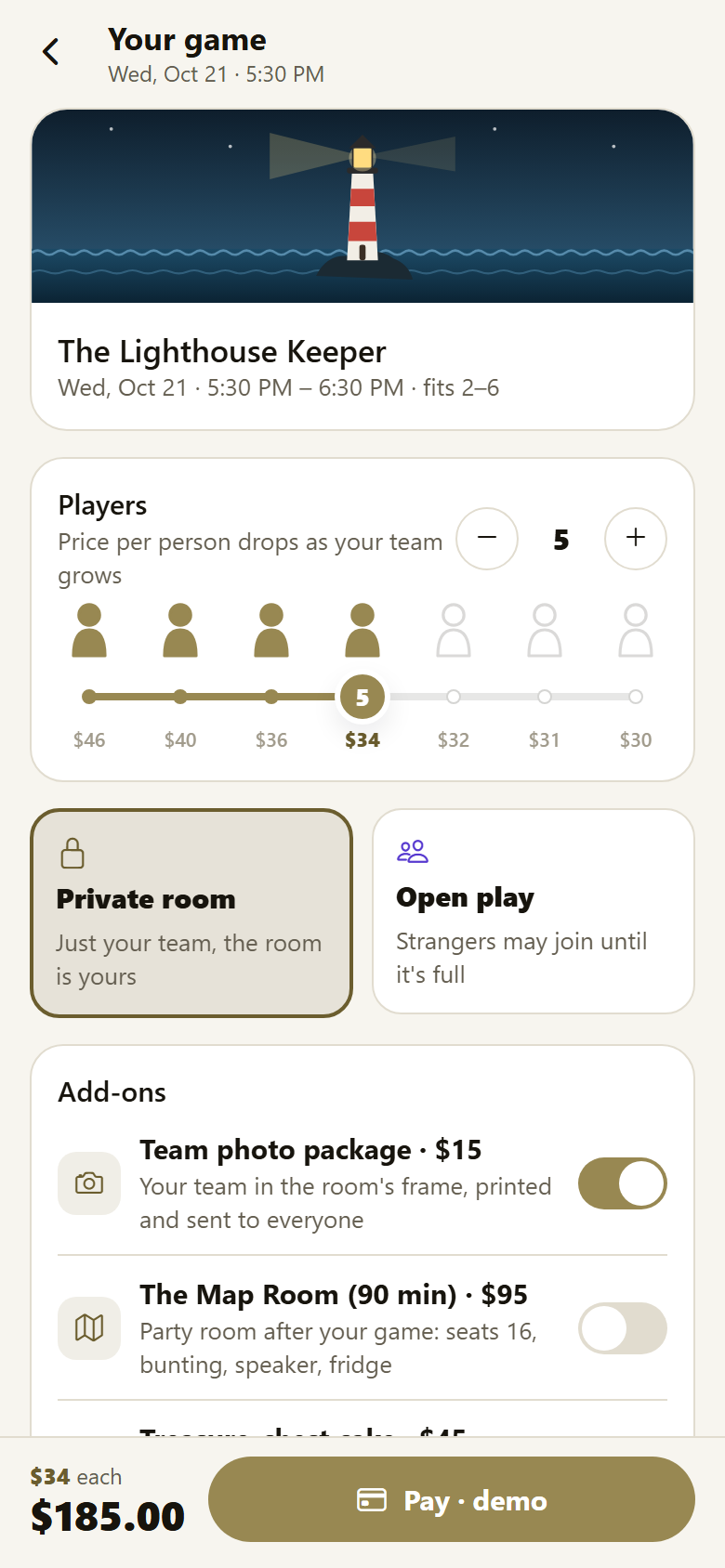
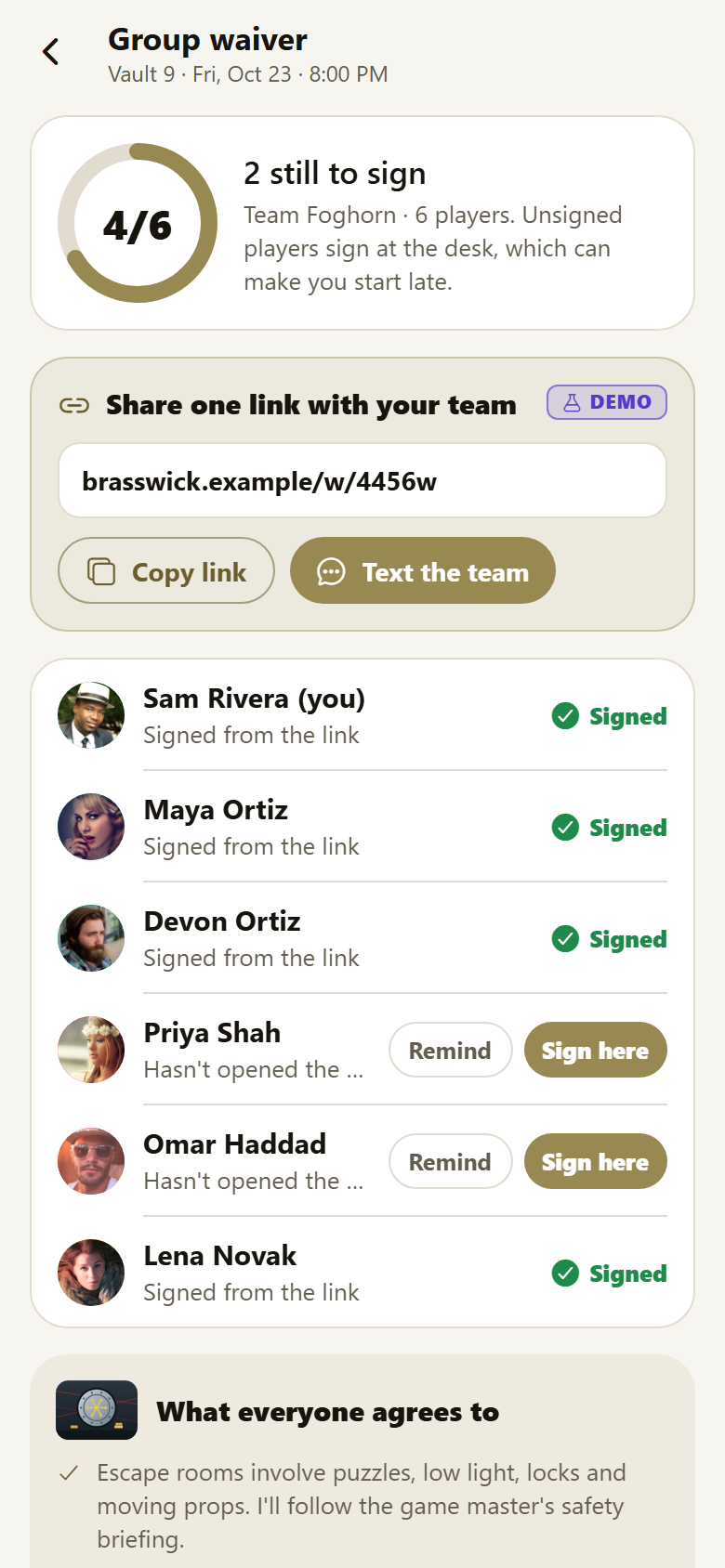
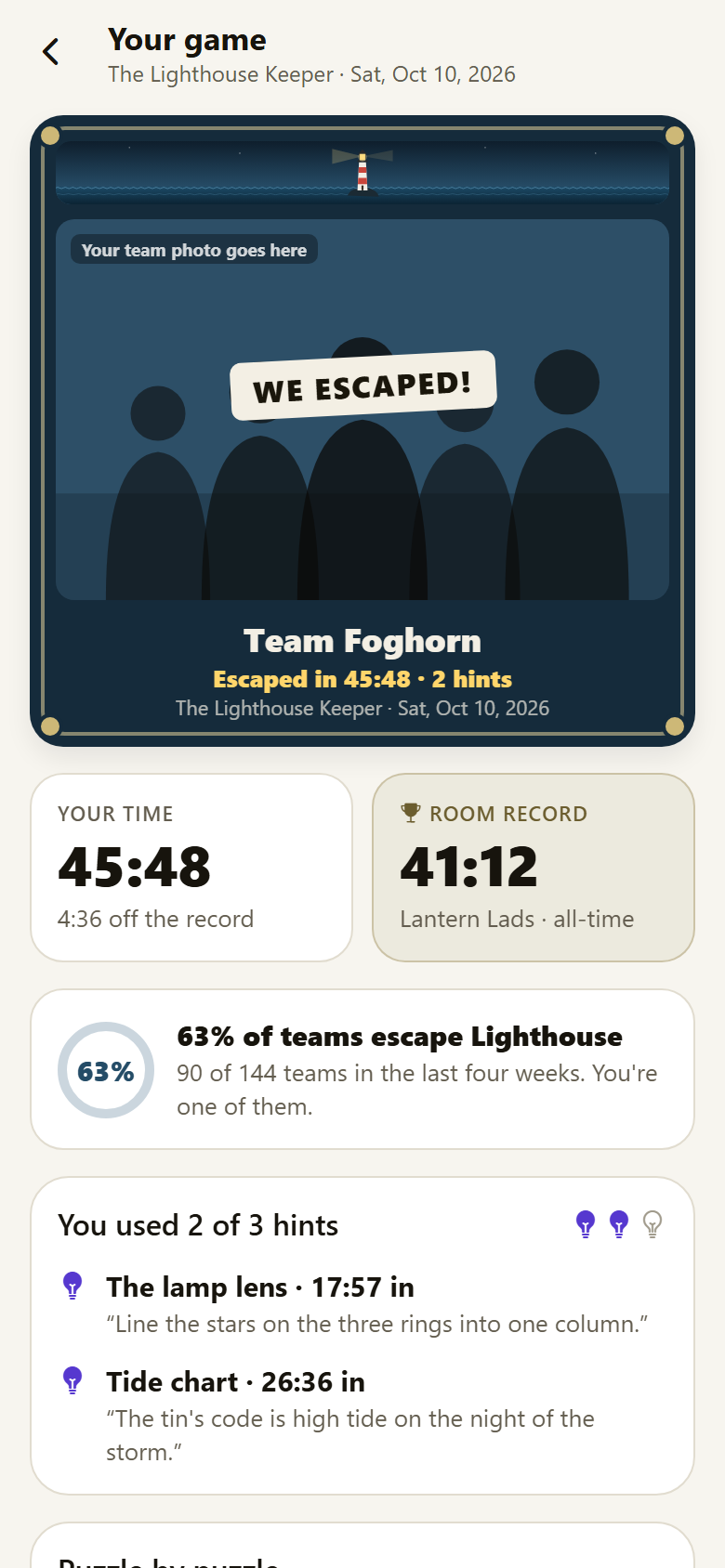
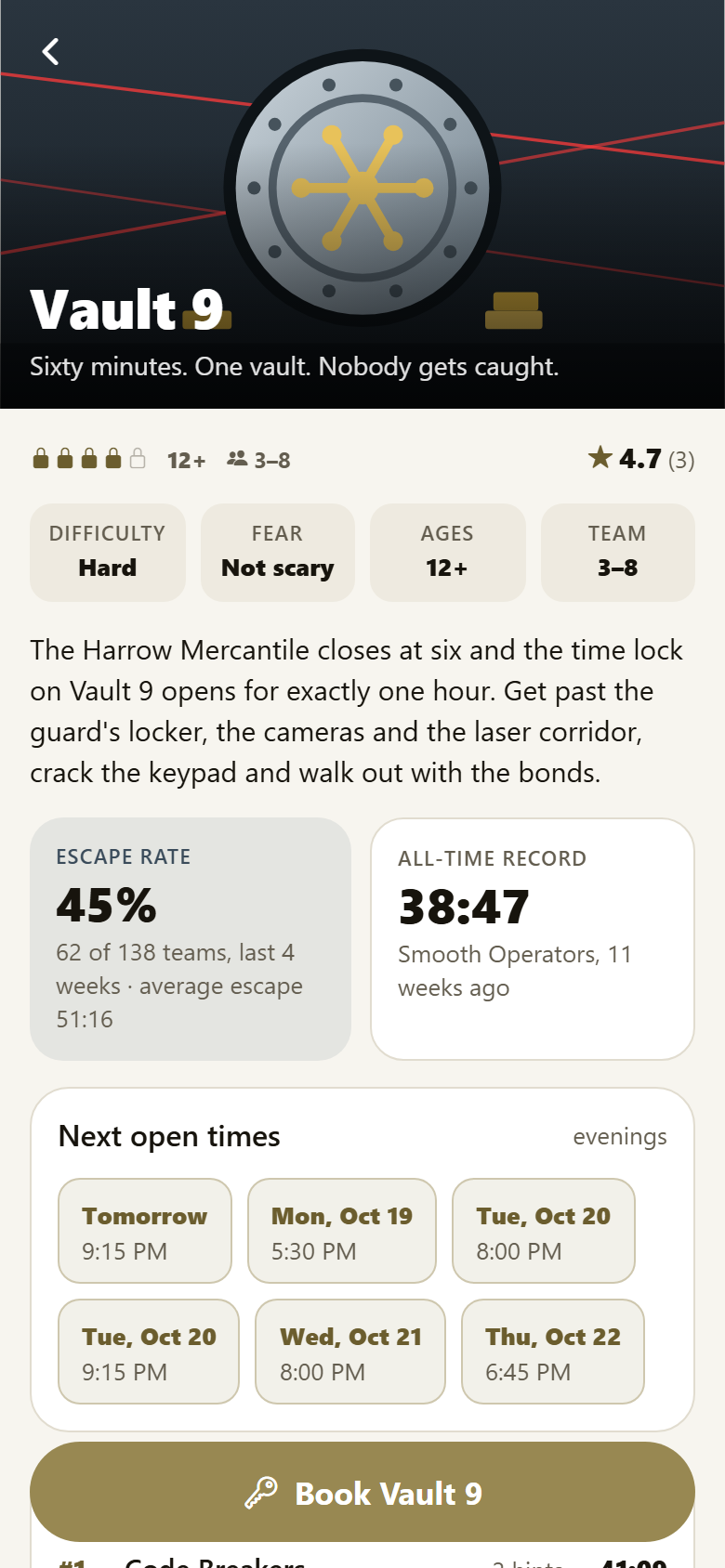
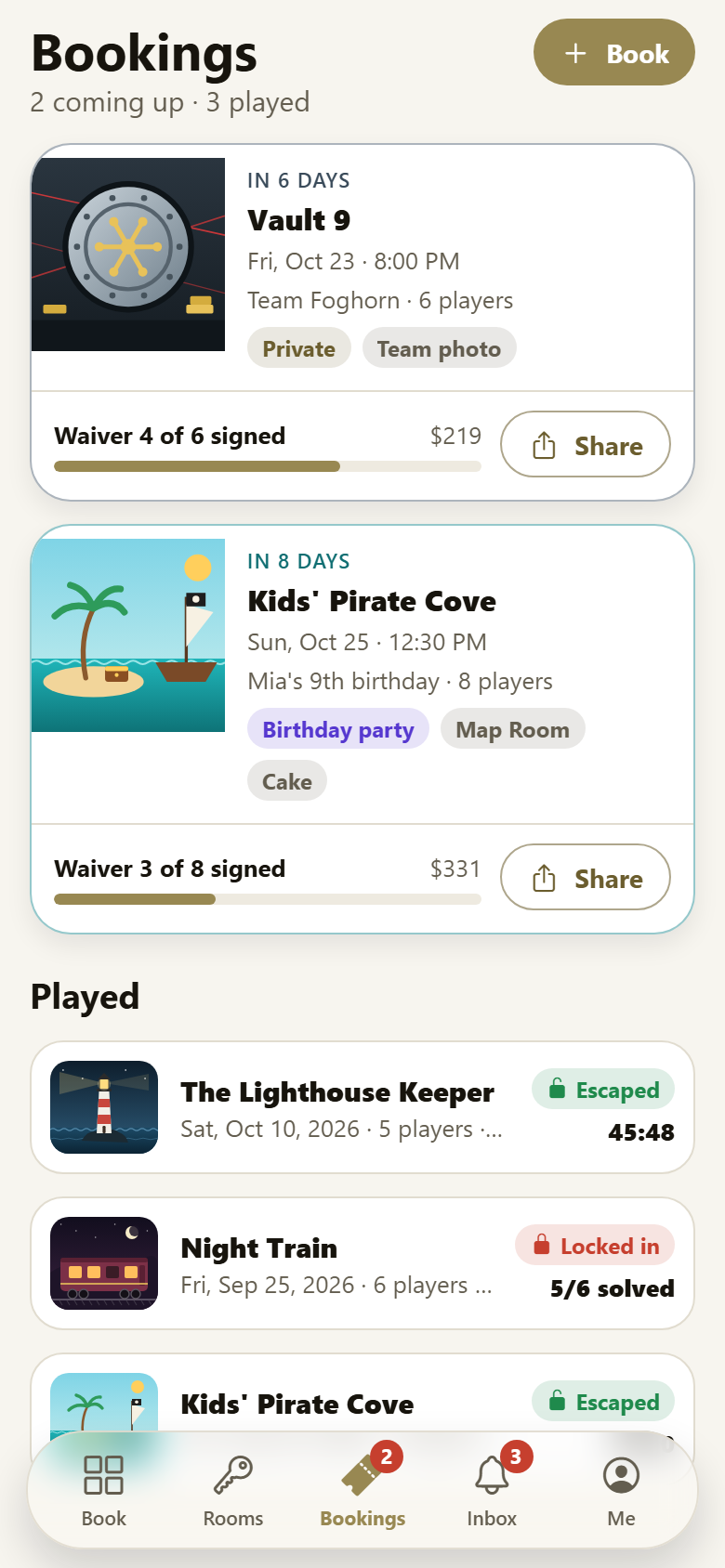
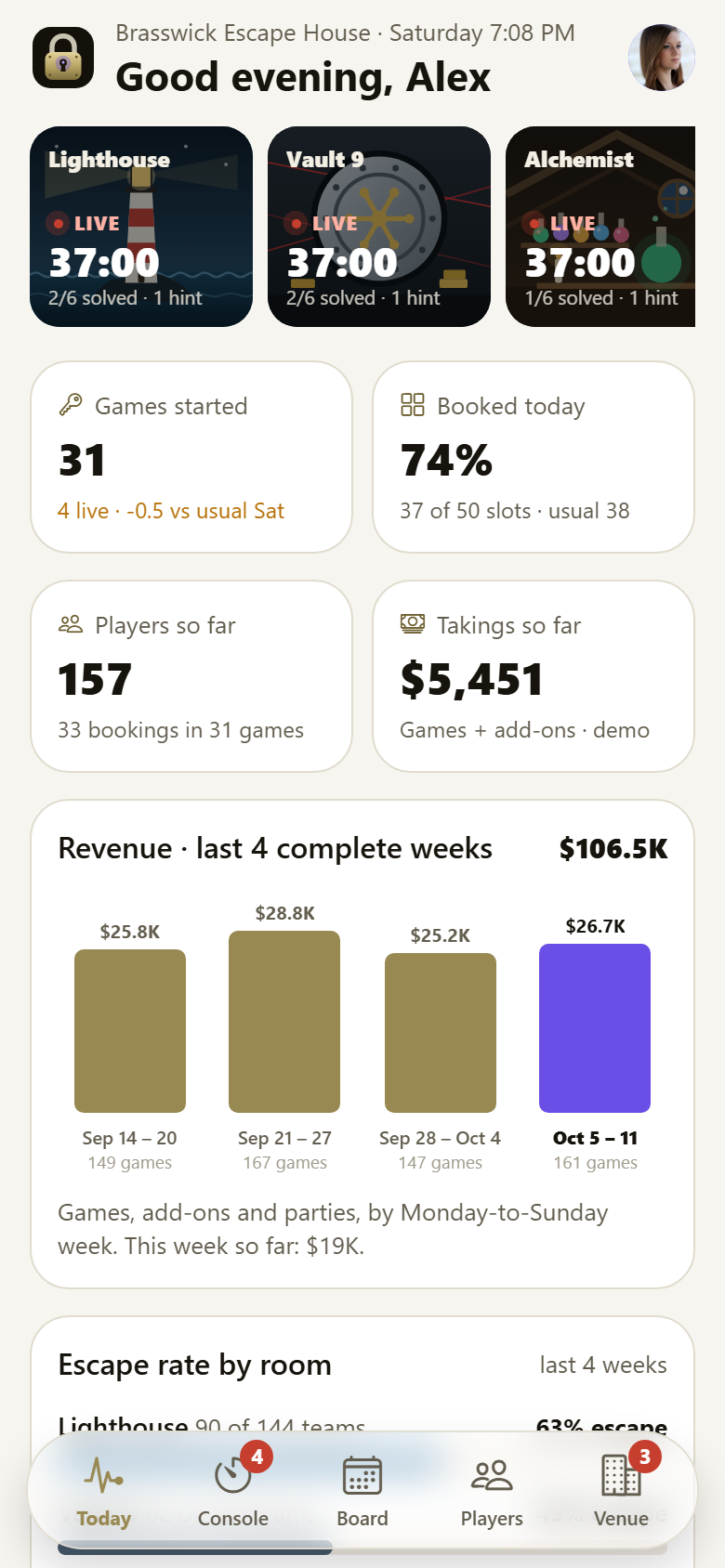
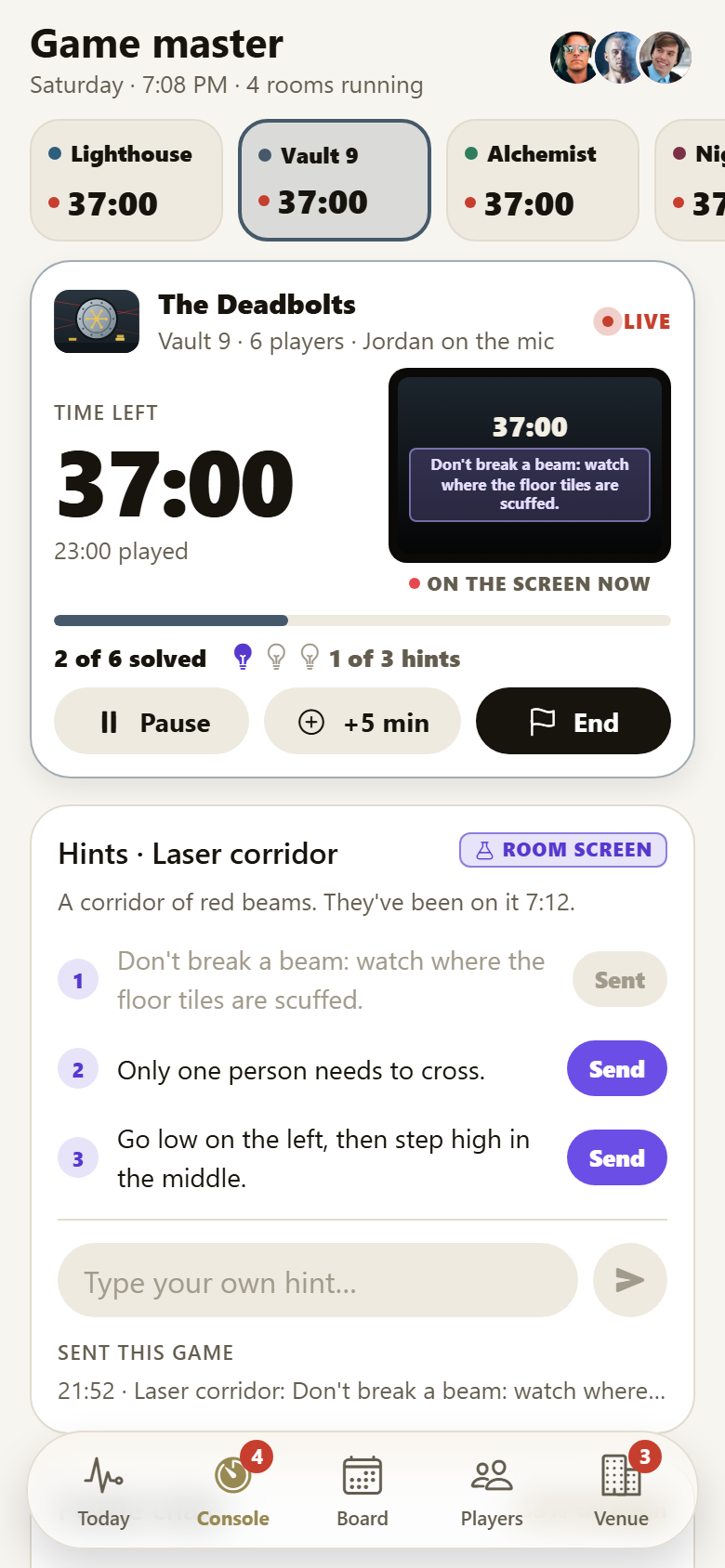
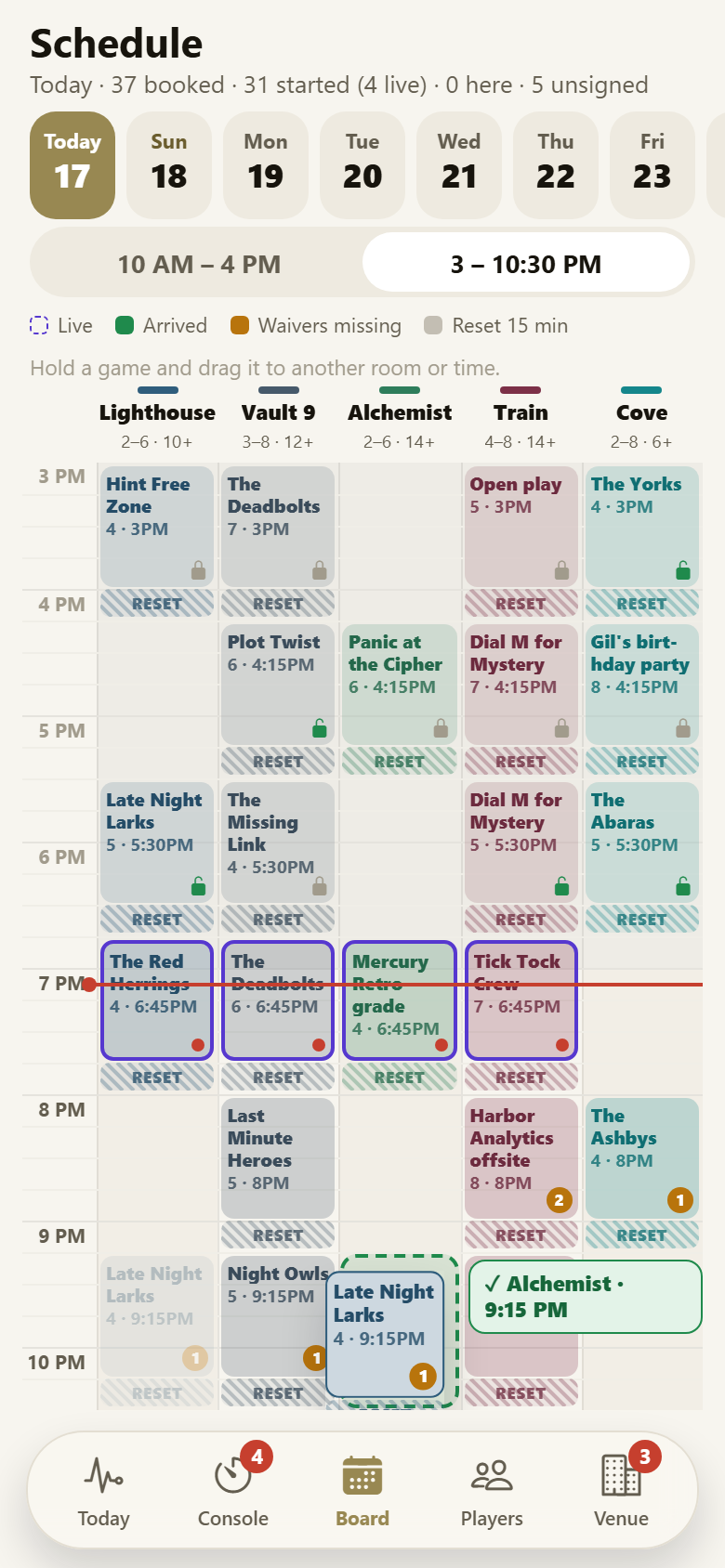
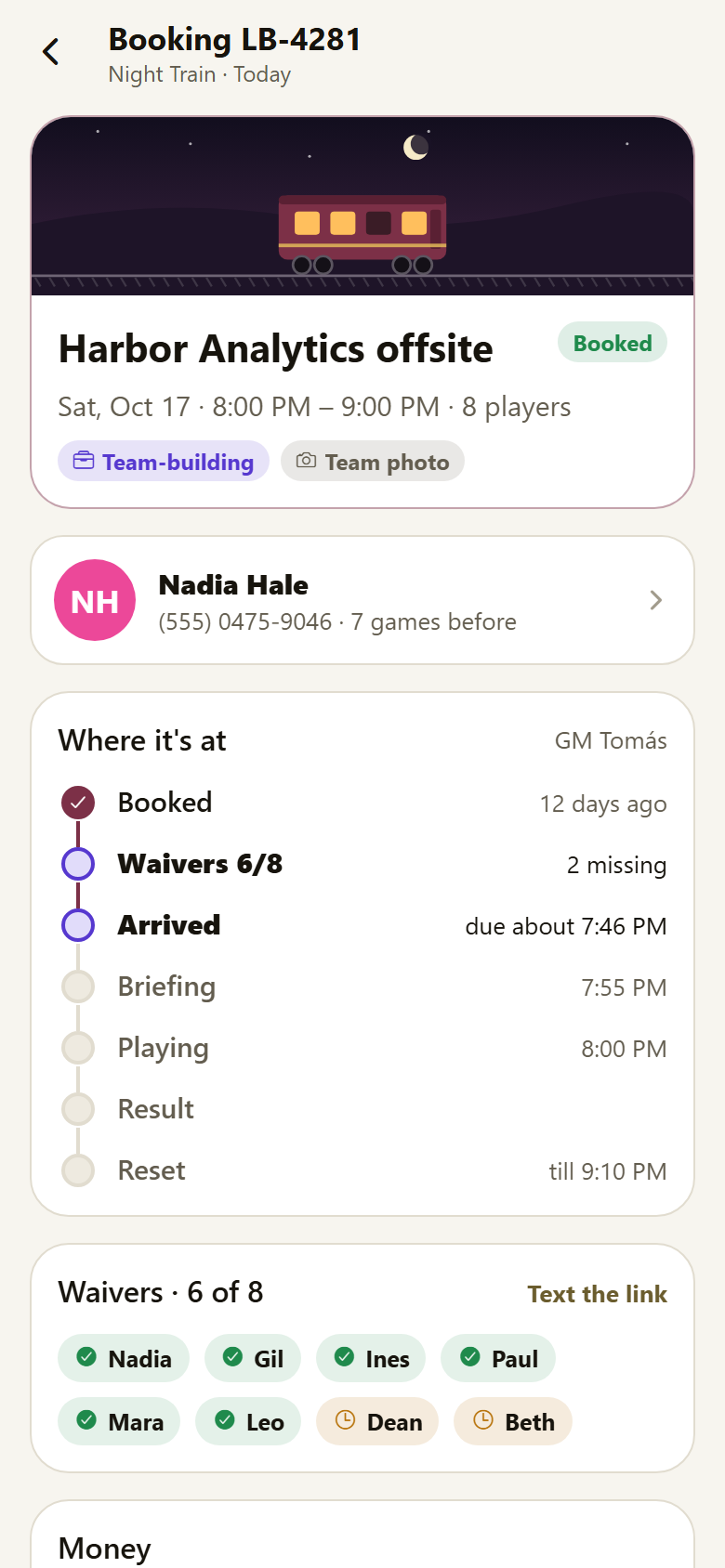
An escape-room venue's own app with both sides in one: the players' and the venue's. Players book on a room × time grid, a day strip, then every room as a row with its drawn art, difficulty padlocks, fear ghosts and age limit, and every start time across (a 60-minute game and a 15-minute reset), booked games greyed, open-play games where strangers may join marked with the seats left, by dragging a party slider of drawn players from 2 to 8: the price per person under each figure drops as the party grows, every price in the grid rolls with it, and the ticket rolls the price each and the total (weekend and weeknight premiums, the kids' room's own prices). Then they choose a private room or open play, add a team photo package, the party room or a cake, name the team for the leaderboard, and pay (a demo payment) for a receipt with a booking code; share one group waiver link where every player signs (a guardian signs for children) and see who's still missing; browse drawn room posters with each room's own escape rate and record; open a room for its story, next open times, the last four weeks' fastest teams, prices by party size and reviews; see their bookings with countdowns and waiver progress and a booking with what to bring, what was paid, a drawn map and the cancellation policy; read the post-game recap, the team photo in the room's drawn frame, the escape time against the room record, the room's escape rate, "you used 2 of 3 hints" and which puzzles they were for, puzzle-by-puzzle splits and the leaderboard with their row; browse the hall of fame; enquire about birthdays and team-building and buy gift cards; read the inbox, search rooms and answers, keep a room passport, edit their profile and settings. The venue side has today's dashboard (every room live with its countdown, games so far against a usual same weekday up to this minute, how booked today is, players and takings, revenue over the last four complete weeks, each room's own escape rate, how booked each room is this week, what needs a person, latest bookings), the game master console (every room's clock on one strip; the chosen room's big countdown, its screen as the team sees it, the puzzle chain lighting up as they solve it, pre-written hints per puzzle or your own words, the hint count, pause, add five minutes, end the game, all on one clock-driven timeline), the schedule board (rooms × 15-minute rows with each game's reset; drag a booking to another room or time and it refuses a room the party doesn't fit, an age limit, a room still resetting or a clash, saying why beside the finger), players and player records, booking records (timeline, every waiver, deposit and balance, check in, move, refund, cancel), the check-in desk with waiver status per player, reset checklists per room, a party and team-building enquiry pipeline with values, pricing and availability (price per person by party size, premiums, open play, rooms open, hours) and the staff schedule. Twenty-eight screens on seeded rooms, puzzle chains with hints, prices, players and staff, two weeks of bookings, four weeks of played games with results, payments, enquiries and messages.
28 screens, real flows
Make it yours by describing it
Tell Co-Create what to change, in plain words or a voice note. It asks what it needs to know, then shows you designs before anything is built.
Nothing changes until you approve
Approve one piece or a whole section. Every build gets a preview, and you can roll back to any earlier point.
Your app, your code
Go live on a clean address or your own domain, and download the full source whenever you like.
Your idea could be an app by Friday.
Start free. Talk it through, answer a few questions, pick a design and watch it build.
7 days freeCancel anytime